
Yard cleanup clears debris, weeds, and dead growth, cuts back overgrown plants, restores gravel and planting beds, and leaves a property looking cared-for and far easier to keep that way. In Tucson the work is shaped by two forces the calendar can predict: the monsoon, and the weed flush that follows it.
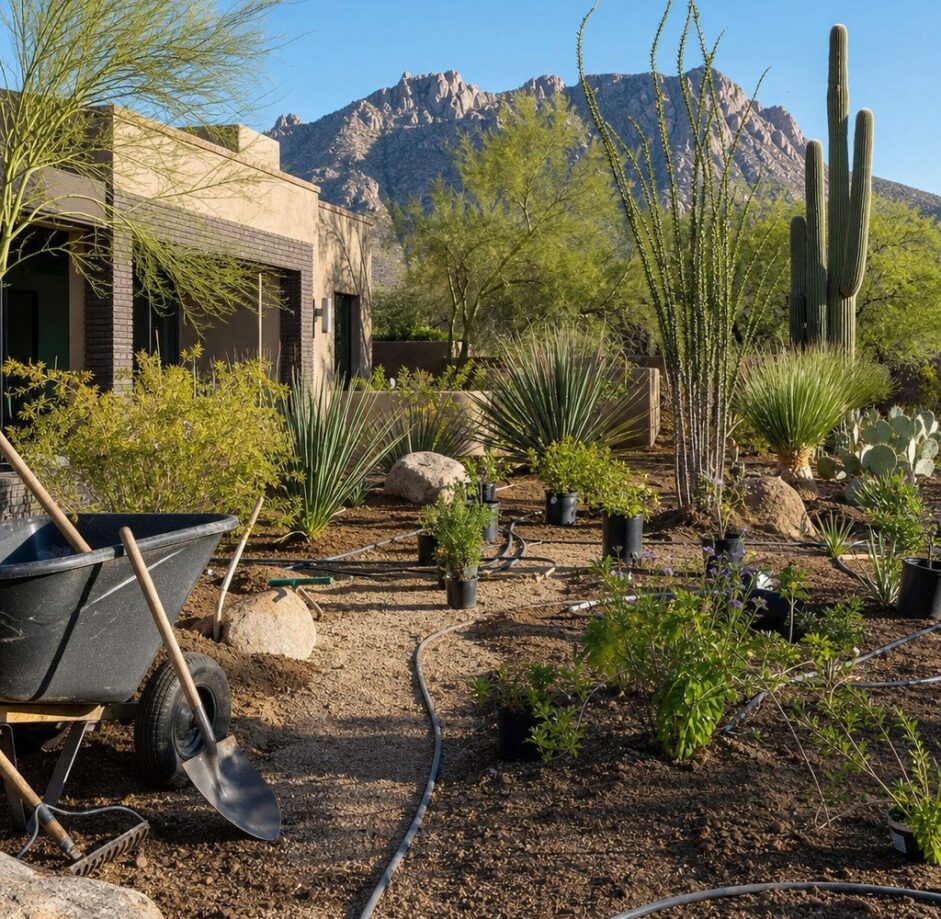
Sonoran Desert yards do not accumulate mess gradually and evenly. They get hit. Monsoon storms strip leaves and small branches, move gravel and decomposed granite out of position, scour some areas and bury others, and wash debris into every low point on the property. Then, days later, the rain that caused the damage triggers a germination flush across the whole yard.
That second wave is the one that does lasting harm. Organic matter carried in by wind and water settles on top of gravel and granite, and over a season or two it forms a shallow soil layer sitting above the weed barrier. Weeds then germinate in that layer — on top of the barrier installed to prevent them. It is the single most common reason a desert yard that stayed clean for two years suddenly will not. Clearing that material before it establishes is a fraction of the work of dealing with what grows in it.
Debris also conceals what needs attention: a cracked drip line, a dead emitter, a basin that has silted up, or a plant that has begun to fail.
Storm debris and leaf litter. Everything blown or washed in is removed, including the accumulations against walls, fences, and bed edges where it piles most deeply.
Weeding. Weeds are cleared from granite, gravel, beds, and hardscape joints. Removing them before they seed is what makes the next visit smaller rather than larger.
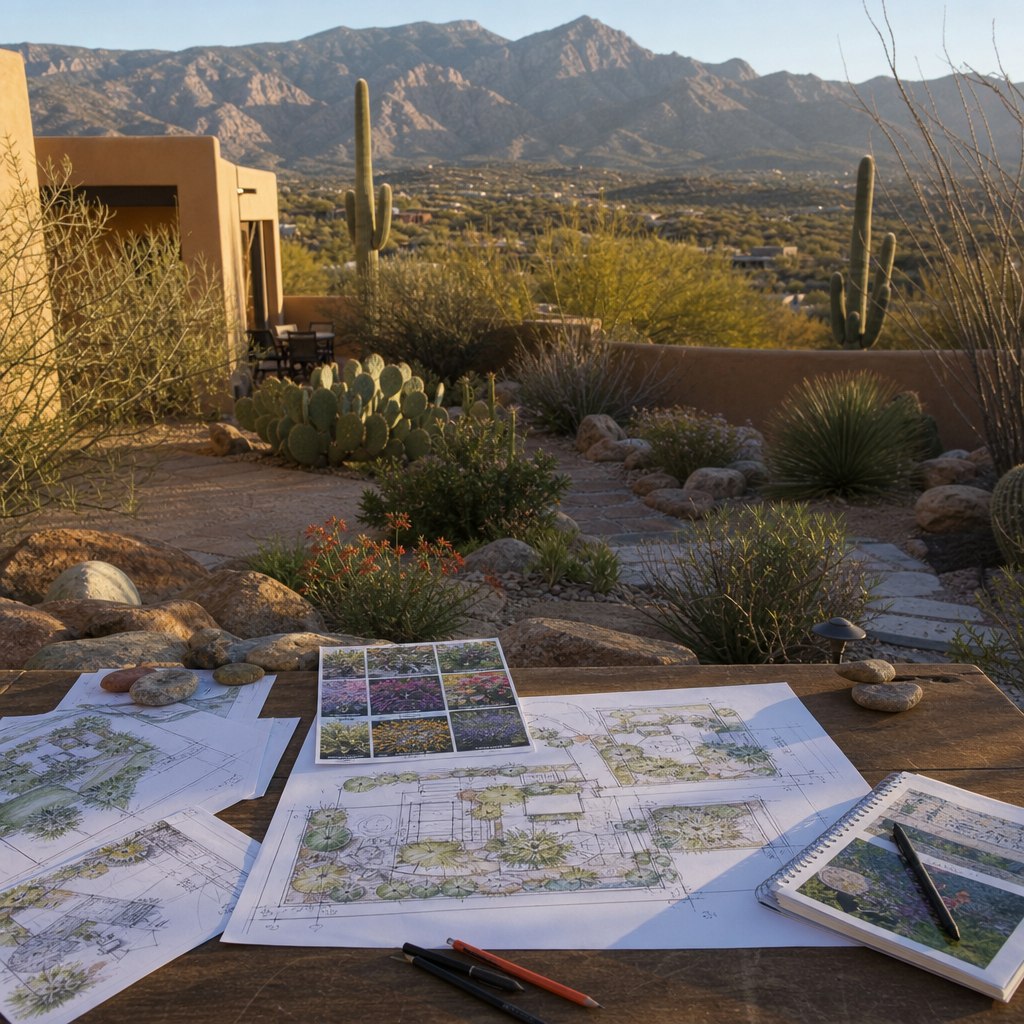
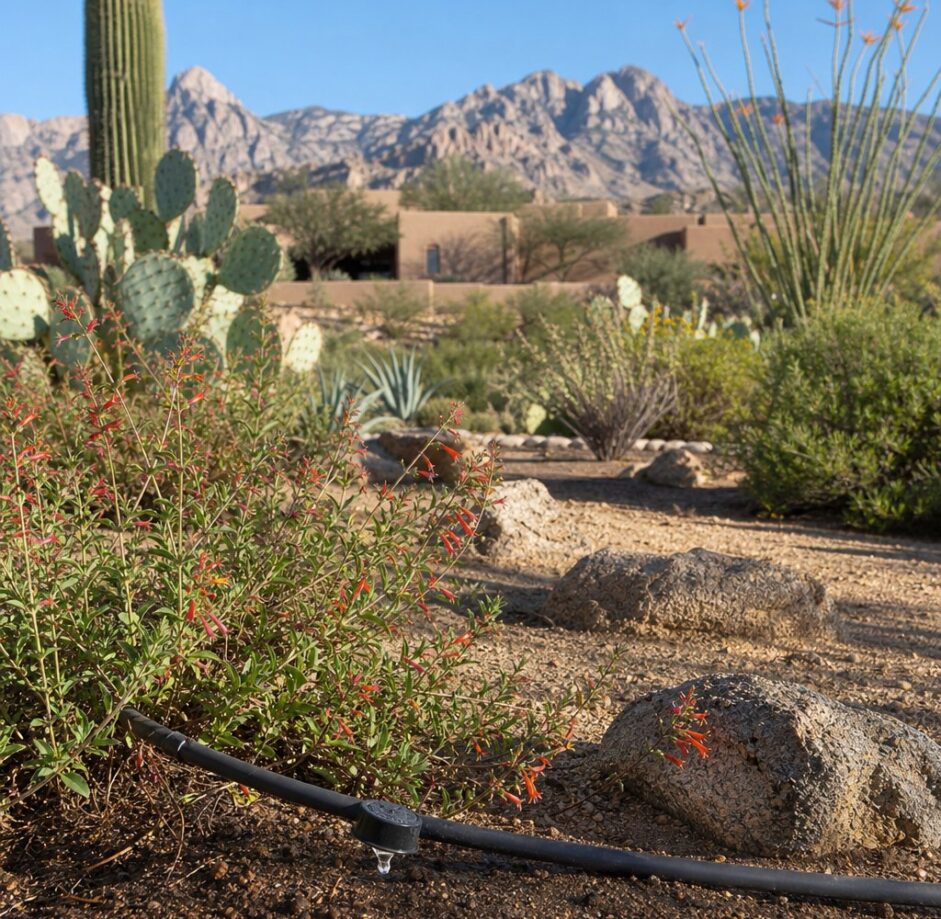
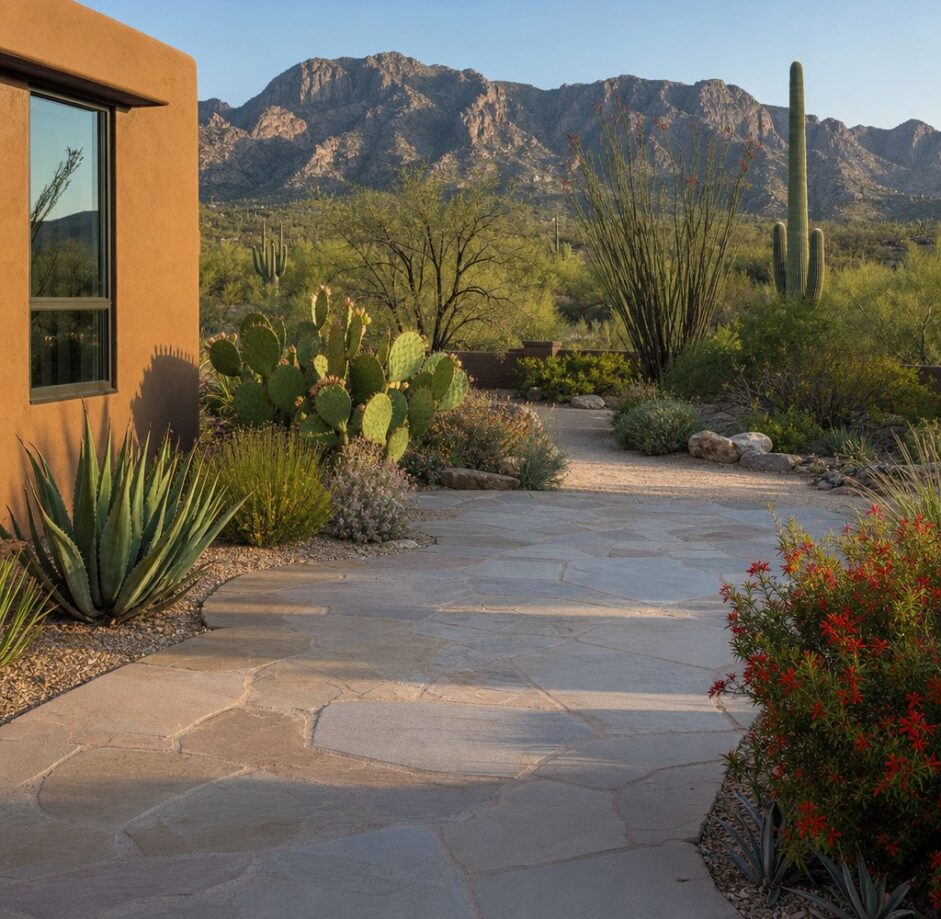
Cutting back. Overgrown shrubs and grasses are cut back to shape, dead growth removed, and spent flower stalks cleared.
Ground-cover restoration. Granite and gravel displaced by storms are raked back to level, edges re-established, and thin areas identified for topping up.
Basin and drainage check. Watering basins and swales that have silted in or washed out are reformed, so the next storm is absorbed rather than shed.
Hard surfaces. Walkways, drives, and patios are cleared of debris and washed-in material.
Irrigation inspection. Zones are run and checked while the yard is clear and every component is visible — the best opportunity of the year to catch a fault.
Haul-away. All green waste and debris leaves with us; nothing is left piled.
Seasonal timing
Tucson’s cleanup calendar is driven by the monsoon rather than by conventional seasons. A pre-monsoon visit clears loose material that storms would otherwise redistribute, cuts back growth, and confirms drainage and irrigation are sound before the heaviest weather. A post-monsoon visit is the important one: it clears storm debris, catches the germination flush before it seeds, and repairs the basins and ground cover that heavy rain moved.
Properties with mature trees, significant wind exposure, or a position that collects runoff from higher ground generally do better on recurring visits than on two large resets a year.
Cost depends on property size, how overgrown things currently are, the volume of debris and green waste to haul, and whether this is a one-time reset or a recurring visit. The dominant factor is usually elapsed time. A maintained yard is priced as routine work; a yard left for a year or more is a reclamation job, with the debris volume and labour that implies. Storm damage can shift a routine visit into a heavier one. Access matters as well, since everything removed has to be carried out. We quote after seeing the property.
Timeline
Most residential cleanups are done in a single visit. Large lots, heavy storm damage, or badly overgrown properties may need longer, and are sometimes better handled in stages — bulk clearing and haul-away first, then detailed work on beds and plantings once the ground is actually visible.
Book a cleanup after monsoon storms, ahead of storm season, when preparing a property to sell or rent, or whenever weeds and debris have simply gotten ahead of you. If a larger project such as a desert landscape conversion is under consideration, a cleanup first is worth doing — planning a yard you can actually see produces a better result.
Local note: irrigation and runoff after cleanup
Part of a proper cleanup is confirming that drip and sprinkler zones are clear, undamaged, and correctly set. That matters particularly in Tucson, where Tucson Water is in Tier 2 of its Drought Preparedness and Response Plan, the tier tied to Lake Mead falling below 1,045 feet and year-round water-waste rules prohibit daytime sprinkler runoff onto streets. While we are on site we can run each zone, flag any head or emitter throwing water onto pavement, and confirm the controller is set to a schedule appropriate to the season rather than one left over from summer. (Source: City of Tucson — Tucson Water Drought Preparedness. Checked 3 August 2026.)
Frequently asked questions
Will a Tucson cleanup remove collected material? Ask for a written line item covering removal, disposal, exceptions, estimated volume, and the designated location for any mulch, soil, or debris that stays.
Can you set up recurring visits? Yes. Many Tucson properties do best on a recurring schedule, particularly through and after monsoon season, which keeps each visit small.
Do you handle weeds in granite and desert beds? Yes. Clearing weeds from decomposed granite, gravel, and desert plantings is standard, along with raking those surfaces back to level.
Following a Tucson storm, avoid compromised limbs, structures, standing water near electrical equipment, and fallen lines; route urgent hazards to emergency or utility responders. From a safe location, document conditions and obtain a Tucson proposal defining stabilization, debris work, disposal, and limits.
Weeds keep coming back through my gravel. Why? Almost always because organic material has built a thin soil layer on top of the weed barrier, and weeds are germinating above it. Clearing that layer, rather than adding more barrier, is the fix.
Will you check my irrigation while you are here? Yes. We run the zones while the yard is clear and report anything found — blockages, breaks, misaligned heads, or a controller still running a summer schedule.
Sources
City of Tucson — Tucson Water conservation and landscape resources: tucsonaz.gov.
Plan a documented yard cleanup from the Sonoran hydrozone map
Get a Free Quote
Share the Tucson sun, runoff, irrigation, and space-use details.
Tell Us About Your Sonoran Site Before Pricing
Send the sun, runoff, irrigation, access, and use notes that define the proposed Tucson work area and priorities.
Get a Free QuoteFrequently Asked Questions
Where should a Tucson yard-cleanup scope site walk look for compacted ground?
Probe the proposed work area, especially along old paths, wall edges and places where water stalls or sheets away. The observation should be recorded by location so yard-cleanup scope preparation responds to this lot rather than a general soil label.
How can monsoon runoff change the Tucson yard-cleanup scope layout?
Map flow paths, low points and discharge near walls before fixing grades or material boundaries. The layout should preserve safe drainage and identify any condition that needs separate evaluation instead of hiding it inside the finish work.
Which decisions belong after the Tucson property walk?
Final preparation depth, drainage treatment, irrigation changes and access method depend on what is found in the work area. A yard-cleanup scope proposal should keep those items conditional until the site evidence supports them.