Artificial turf gives a Tucson property a green, usable surface with no irrigation, no mowing, and no seasonal overseeding. In a Sonoran Desert city whose water utility sits in Tier 2 of its drought plan, that combination is worth taking seriously for the specific areas of a yard where a green surface actually earns its place.
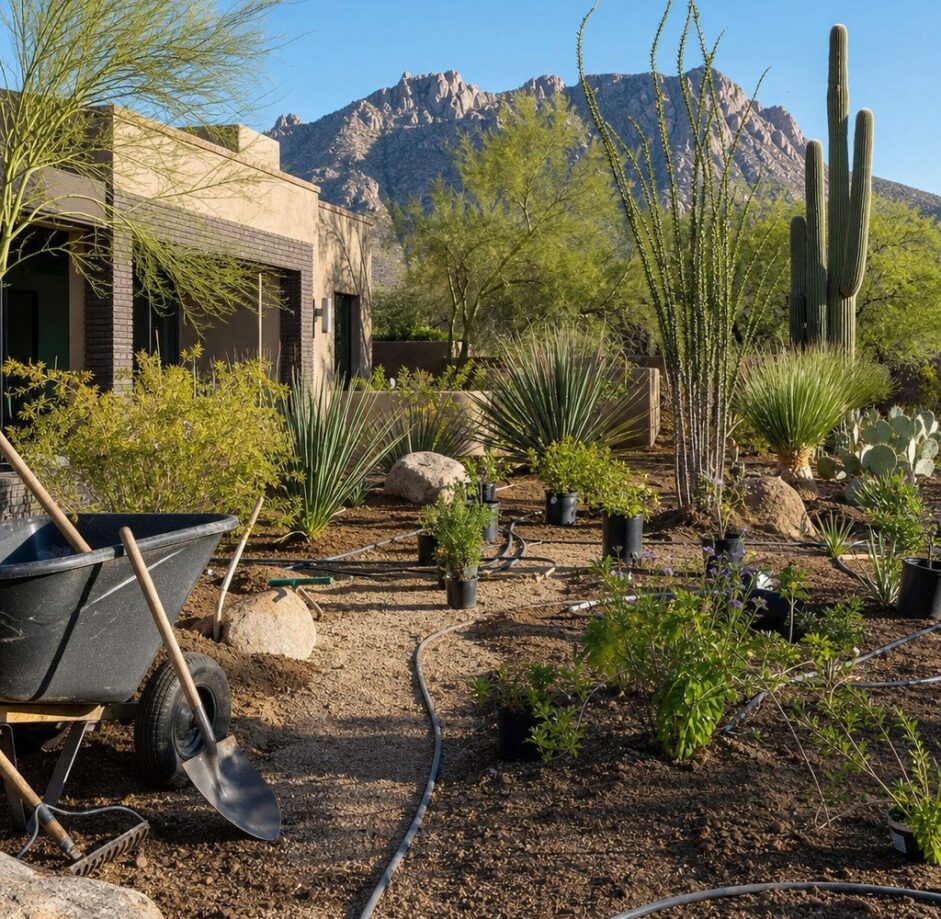
A natural lawn in Tucson carries a year-round obligation, not just a summer one. University of Arizona Cooperative Extension guidance identifies bermudagrass as the best-adapted turfgrass for Arizona’s low desert, including Tucson, because of its heat tolerance and water requirements — but bermudagrass browns off in winter. Keeping a lawn green through the cool season means overseeding with a winter grass each autumn and then watering that winter turf, which Extension guidance indicates can require roughly half an inch to an inch and a half per week between November and May.
So a green year-round natural lawn in Tucson means summer irrigation for bermudagrass, an annual overseeding operation in autumn, and a winter watering requirement on top. Artificial turf removes all three at once. It also sits entirely outside Tucson Water’s runoff concerns, because it is never irrigated at all.
Turf failures are base failures. The visible product is the last and simplest part of the job.
Excavation. Grass, roots, and soil are removed to a depth that leaves room for a real base. With bermudagrass this matters twice over, since it regenerates readily from anything left behind.
Base construction. Crushed aggregate is placed in lifts, graded, and compacted. The base carries the load, holds the surface flat over years of use, and passes water straight through instead of holding it.
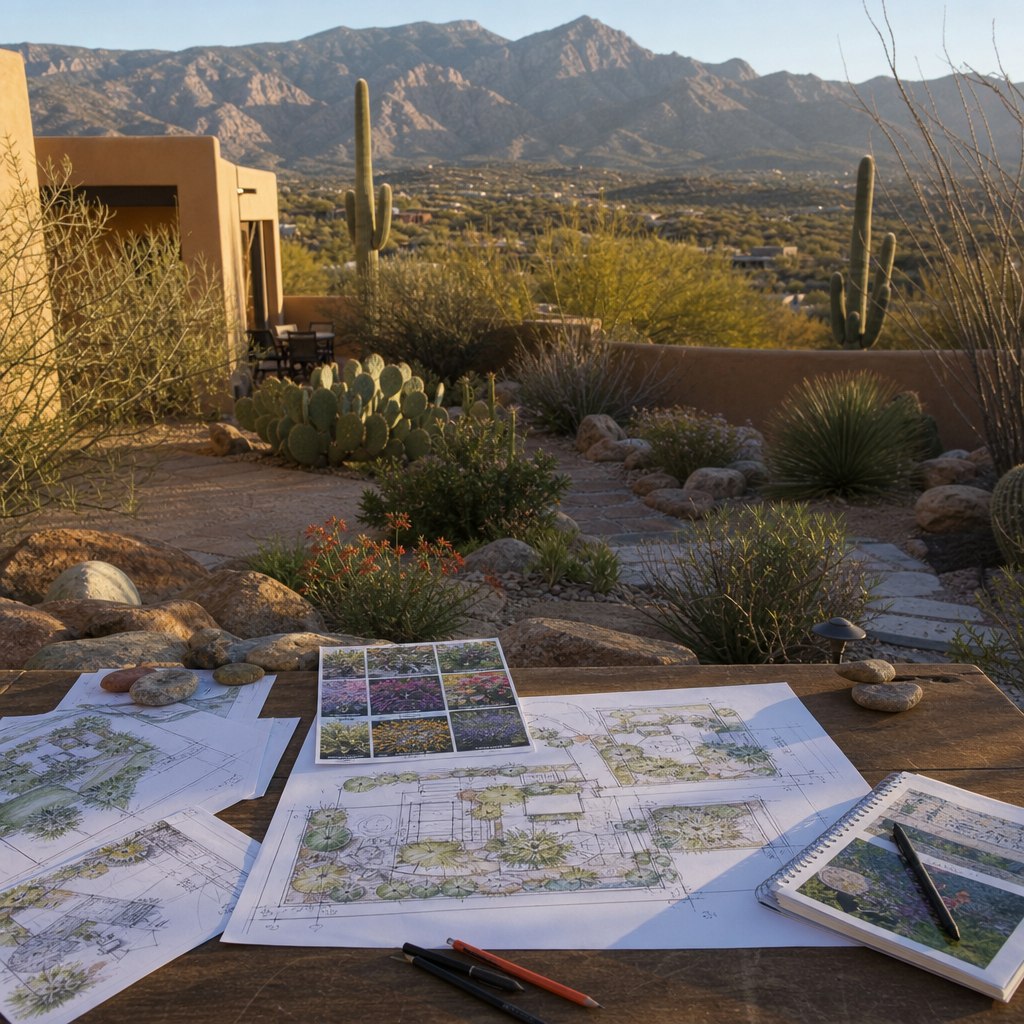
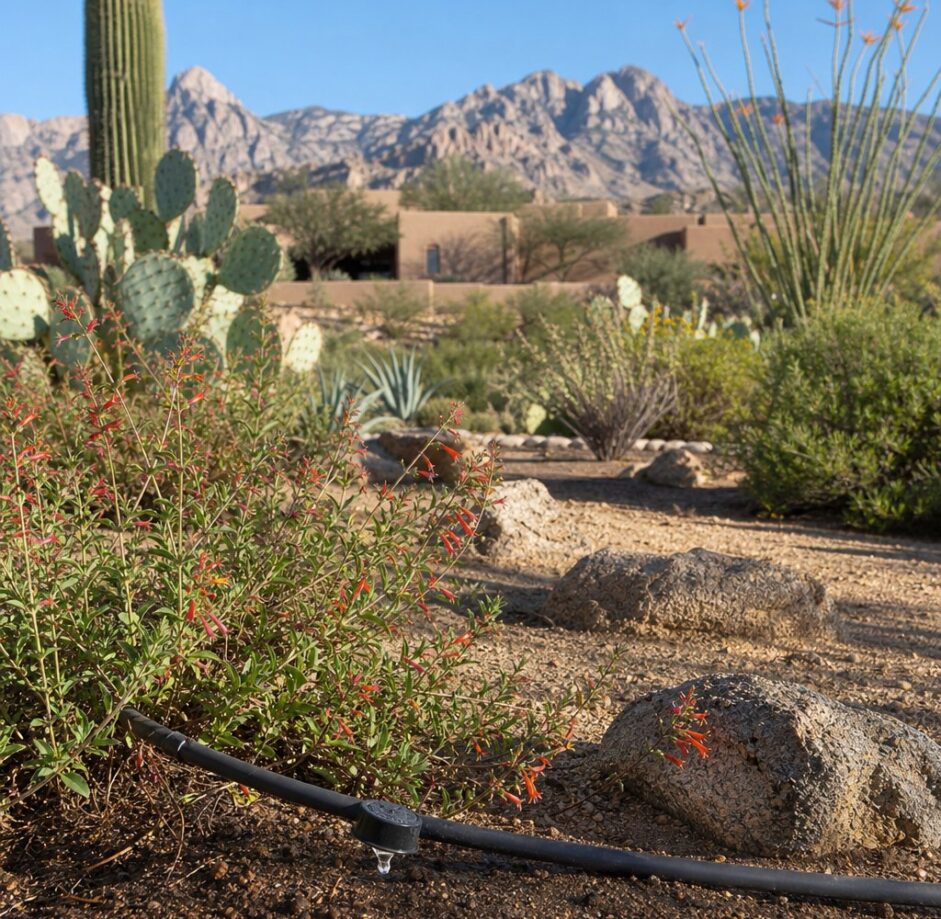
Drainage for monsoon rain. Tucson’s rain arrives fast and heavy. The base is graded so that a storm drains through and away rather than pooling at the low point of the installation, and additional drainage is built where a site genuinely needs it.
Weed barrier. A permeable barrier over the finished base blocks growth from below while still letting water through.
Turf, seaming, anchoring. Turf is laid with pile direction consistent across the whole area, seamed, and secured at every edge. Inconsistent pile direction is what makes an installation read as panels rather than as lawn.
Infill. Infill is brushed in to weight the turf, hold blades upright, and protect the backing. It determines how the surface feels and how well it recovers from traffic.
Specification should follow use. A dense, lower pile with high face weight takes heavy foot traffic and springs back, which suits play areas and pet runs. A longer, softer pile reads more like an unmown lawn and suits ornamental areas that are looked at more than used. Pet installations want backing that drains genuinely freely and an infill chosen with odour in mind. Installing an ornamental product in a high-traffic area is the most common specification error and it shows within a season.
Cost is driven by area, how much existing lawn or hardscape must be removed and hauled away, the base preparation and drainage the site requires, the turf product selected, and infill and edging. Access is a real factor, since base aggregate is heavy and all of it has to reach the work area. Caliche makes excavation slower where it is encountered. Small, awkward, heavily prepared areas cost more per square foot than large open ones. We measure and quote on site.
Timeline
Most residential installations take a few days: removal and grading, then base placement and compaction, then turf, seaming, infill, and edging. Base work is the bulk of the time and compaction cannot be hurried — time saved there returns as settling and dips later.
Artificial turf is the right answer for defined, genuinely used areas: play space, pet runs, small front lawns, courtyards, and narrow side yards where nothing natural thrives. It is a weaker answer as a wall-to-wall replacement across a large property, where cost rises steeply and a large uniform expanse can read as artificial. On most Tucson lots the best outcome pairs a modest turf area with desert landscaping across the rest.
Local relevance: water constraints and the winter-lawn cycle
Tucson Water is in Tier 2 of its Drought Preparedness and Response Plan — the tier tied to Lake Mead falling below 1,045 feet — and year-round water-waste rules prohibit daytime sprinkler runoff onto streets. Artificial turf requires no irrigation whatsoever, so it neither draws on constrained supply nor creates runoff. It also ends the annual overseeding cycle that a green winter lawn otherwise requires — perennial ryegrass, the most common winter grass, is planted into bermudagrass turf and carries the green from roughly October through May. (Sources: City of Tucson — Tucson Water landscape resources; University of Arizona Cooperative Extension az1683.)
(Source: City of Tucson — Tucson Water Drought Preparedness. Checked 3 August 2026.)
Maintenance is light rather than absent. Debris is cleared as it accumulates, the pile is brushed periodically along traffic lanes to keep blades upright, and infill is topped up as it settles and migrates over the years. Pet areas benefit from periodic rinsing. Kept up routinely these are quick tasks; neglected for years, matted pile and depleted infill are what age an installation prematurely.
Frequently asked questions
Does artificial turf need water in Tucson? No irrigation at all. An occasional rinse for cleanliness is the only water it ever sees.
Does it get hot in full Tucson sun? It warms as any surface does in direct sun. Product and infill choice, shade, and a rinse before use manage surface temperature, and shaded installations run noticeably cooler than fully exposed ones.
Do I still need to overseed in the autumn? No. Overseeding exists to keep dormant bermudagrass green through winter. Artificial turf has no dormancy and no overseeding requirement.
Is it suitable for dogs? Yes, with the right specification — free-draining backing and an appropriate infill. A pet installation is a distinct build rather than the same job renamed.
What happens during monsoon storms? Water passes through the permeable backing into the compacted base and drains away, which is exactly why base construction and grading matter so much.
How long does it last? Quality turf gives many years of service. Realistic lifespan depends on the product, the traffic it carries, and whether the base underneath was built correctly.
Sources
City of Tucson — Tucson Water conservation and landscape resources: tucsonaz.gov. University of Arizona Cooperative Extension — overseeding winter grasses into bermudagrass turf (az1683) and low-desert turfgrass maintenance guide (az1817): extension.arizona.edu.
Review an artificial-turf scope from the Sonoran hydrozone map
Get a Free Quote
Share the Tucson sun, runoff, irrigation, and space-use details.
Tell Us About Your Sonoran Site Before Pricing
Send the sun, runoff, irrigation, access, and use notes that define the proposed Tucson work area and priorities.
Get a Free QuoteFrequently Asked Questions
Where should a Tucson artificial-turf planning site walk look for compacted ground?
Probe the proposed work area, especially along old paths, wall edges and places where water stalls or sheets away. The observation should be recorded by location so artificial-turf planning preparation responds to this lot rather than a general soil label.
How can monsoon runoff change the Tucson artificial-turf planning layout?
Map flow paths, low points and discharge near walls before fixing grades or material boundaries. The layout should preserve safe drainage and identify any condition that needs separate evaluation instead of hiding it inside the finish work.
Which decisions belong after the Tucson property walk?
Final preparation depth, drainage treatment, irrigation changes and access method depend on what is found in the work area. A artificial-turf planning proposal should keep those items conditional until the site evidence supports them.