
Tree trimming keeps desert and shade trees sound, safe, and well-formed by removing dead, damaged, and crossing limbs and clearing growth away from roofs, drives, and overhead lines. In Tucson the work carries a specific seasonal urgency: monsoon storms find every structural weakness a tree has, and they find it all at once.
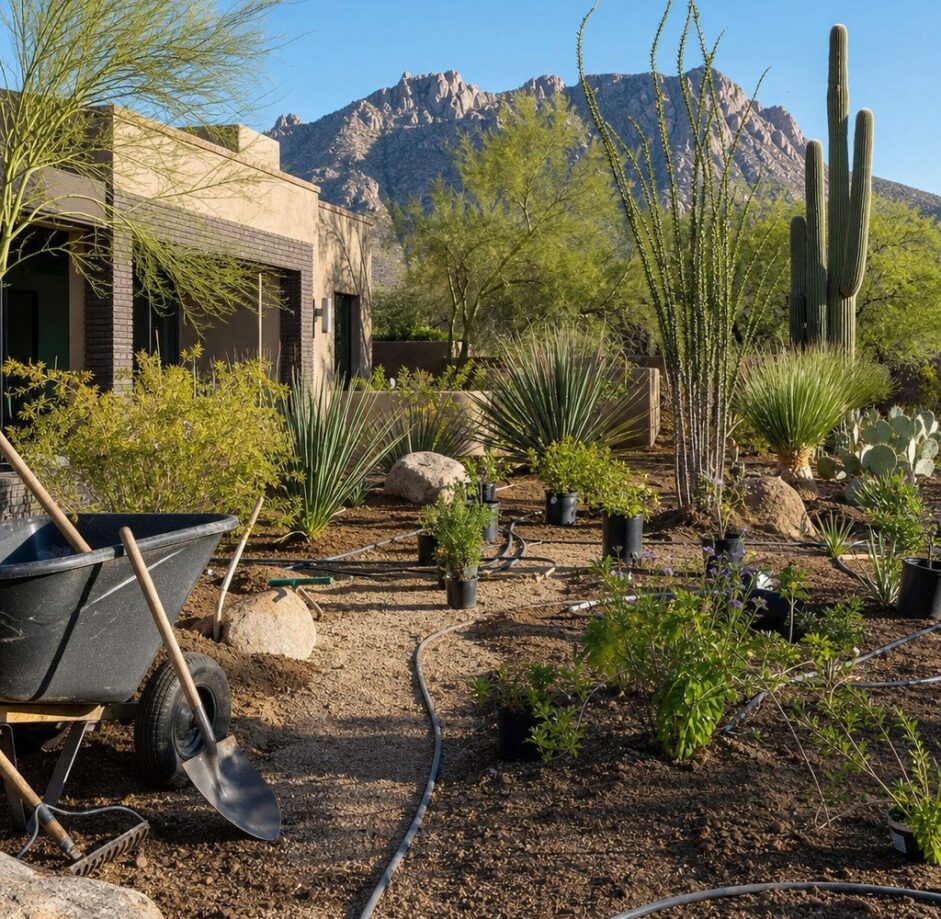
Shade is the most valuable thing a Tucson yard can own. A mature canopy lowers the surface temperature of everything beneath it, reduces the heat load on the house, and cuts the water demand of the plants growing in its shadow. It also takes many years to grow and cannot be bought back quickly.
Monsoon season is what puts that asset at risk. Storms arrive with sudden, strong, gusting winds, frequently onto trees carrying a full canopy, and often onto ground that has just been saturated by intense rain. That combination — maximum sail area, maximum wind, minimum root anchorage — is what brings desert trees down. Mesquite and other fast-growing desert species are especially prone to it, because rapid growth tends to produce heavy, overextended limbs and weak, narrow-angled unions.
Pruning addresses this directly. Removing deadwood, correcting poor structure while it is still small, and selectively reducing wind resistance are what let a tree pass through a storm rather than fail in it.
Assessment. The tree is read as a structure before anything is cut: where the weight sits, which unions are sound, what is dead, what rubs, and what is heading toward a roof or a line.
Deadwood removal. Dead limbs will fall eventually and they fall without warning. This is the highest-value pruning on nearly any mature tree.
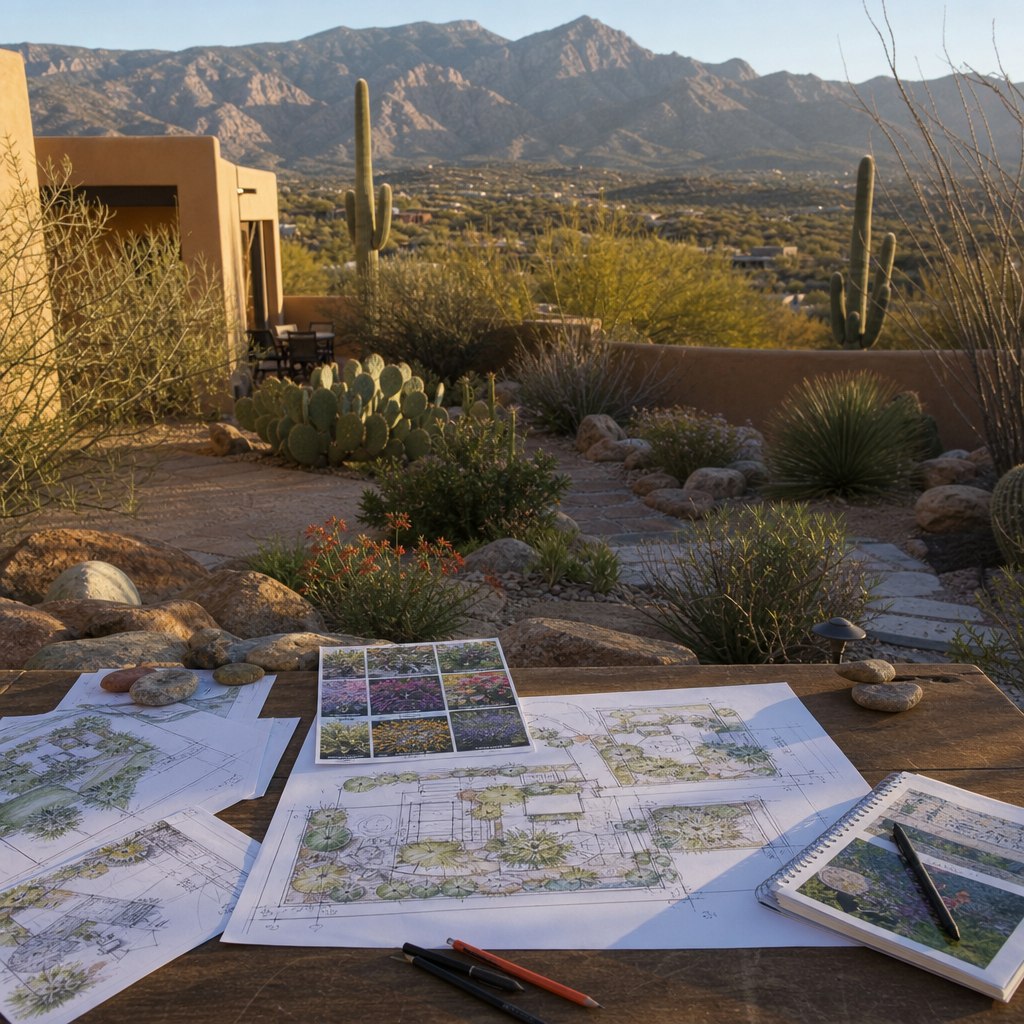
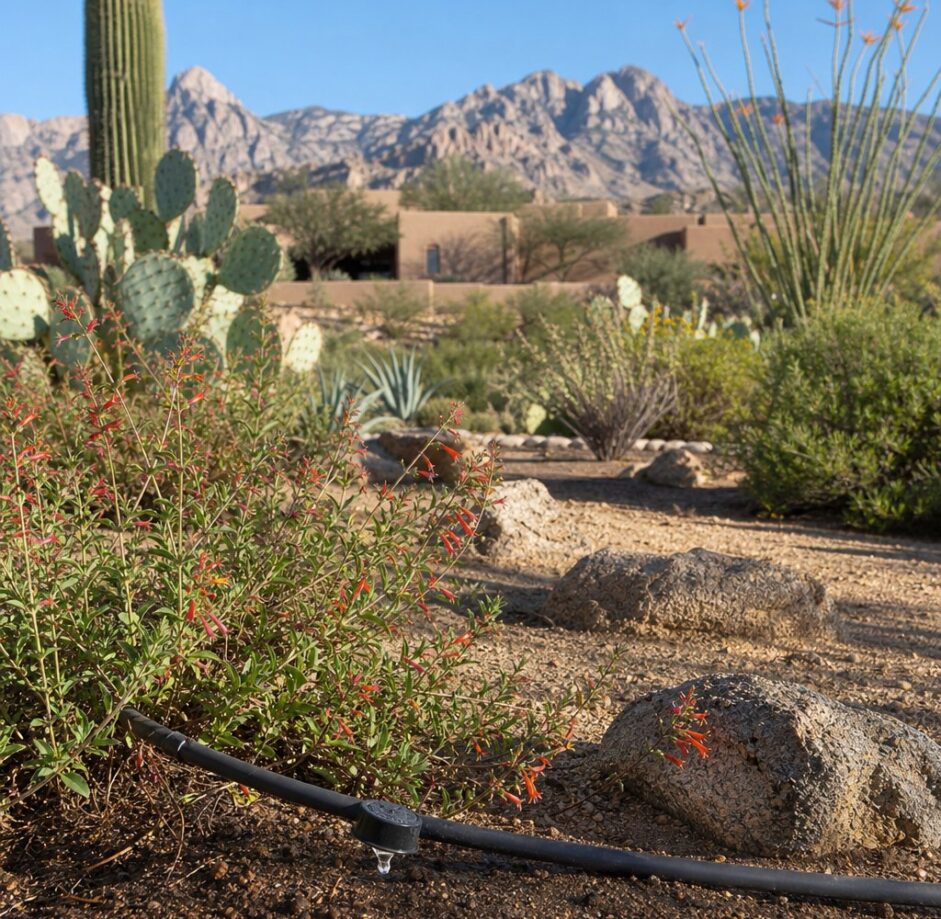
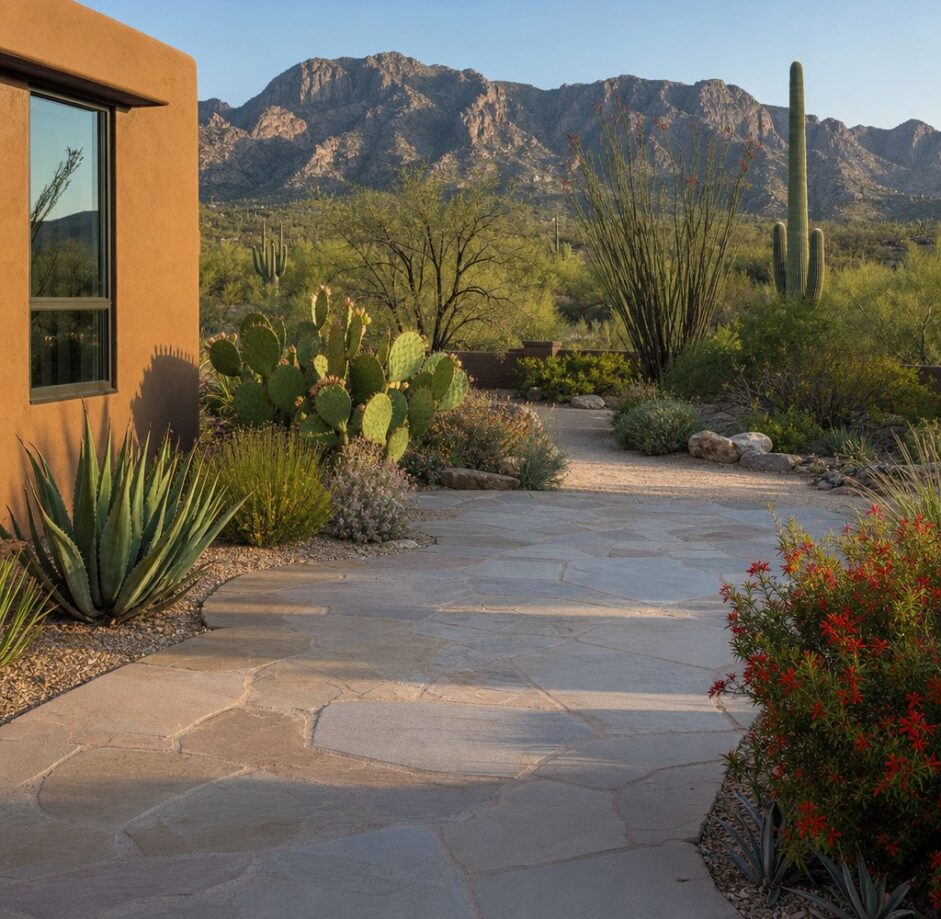
Structural correction. Crossing and rubbing limbs are removed before they wound one another. Competing leaders and weak unions are addressed while they are still small enough to address cheaply.
Selective thinning for wind. Thinning reduces the sail area a storm can push against, and lets wind pass through the canopy rather than against it. Done properly it is selective and restrained; done as a blanket reduction it strips the tree of the leaf area it needs to feed itself.
Clearance work. Branches are cleared from roofs, walls, drives, walkways, and overhead lines with future growth accounted for, so the clearance holds rather than needing repeating next year.
The Tucson cleanup record confirms cut material left the site and the work zone is clear.
Cuts are placed correctly relative to the branch collar so the tree can seal its own wounds. Flush cuts remove the tissue needed to close the wound; long stubs simply die back. Larger limbs are taken in stages so falling weight cannot tear bark down the trunk.
Topping — cutting main limbs back to stubs for height control — deserves naming because it remains common and it is genuinely damaging. It removes the foliage the tree lives on, forces dense weakly attached regrowth, and leaves wounds the tree cannot close. That regrowth is precisely what fails in the next monsoon. Height and spread concerns are properly handled by selective reduction to suitable lateral branches.
Cost depends on the number and size of the trees, their height, the amount of deadwood and structural work required, and access. Access is frequently the largest single factor: a tree standing clear in an open yard is straightforward, while the same tree behind a narrow gate or overhanging a roof, a wall, or a pool must be rigged down piece by piece under control. Debris volume and haul-away also count. We assess and quote on site, because two identical trees in different positions are very different jobs.
Timeline
Most residential jobs are completed in a single visit. Larger properties, several mature trees, or work requiring careful rigging over structures take longer. Clean-up and haul-off are part of the job, not a separate visit or a separate line on the quote.
The most valuable timing in Tucson is before monsoon season rather than after it. Pre-storm structural work is preventive; post-storm work is cleanup of damage that pruning could often have avoided. Beyond that, dead, damaged, or hazardous limbs are dealt with whenever they are found. Book a visit when you can see deadwood, crossing limbs, growth over a roof or driveway, branches approaching overhead lines, or a canopy that has simply become dense and heavy.
Local note: watering trees under Tucson’s rules
Trees need deep, infrequent watering to stay resilient, and how that water is applied matters under Tucson’s rules. Tucson Water operates in Tier 2 of its Drought Preparedness and Response Plan, declared when Lake Mead falls below 1,045 feet, and year-round water-waste rules prohibit daytime sprinkler runoff onto streets. Deep watering at the drip line — where the feeder roots actually are — rather than frequent shallow watering at the trunk both builds a better-anchored tree and avoids producing runoff. A well-rooted tree is also a tree far less likely to go over in a storm. (Source: City of Tucson — Tucson Water Drought Preparedness. Checked 3 August 2026.)
Frequently asked questions
When is the best time to trim trees in Tucson? Structural and wind-reduction work is best done ahead of monsoon season. Dead, damaged, or hazardous limbs are removed at any time of year, and heavier structural pruning is often best while a tree is least stressed.
Will thinning stop my tree blowing over? Nothing makes a tree storm-proof, but reducing wind resistance and removing structurally unsound limbs materially improves its odds. Proper deep watering, which encourages deeper anchoring roots, works alongside it.
For a Tucson pruning proposal, treat cleanup as its own line item. Specify whether cut material will be chipped, stacked, or hauled; state where equipment may enter; and record who handles oversized wood. This separates the pruning decision from disposal logistics and prevents an unwritten inclusion from becoming a billing dispute.
Tucson clearance request. Map each roof edge, wall, drive, walkway, and utility conflict before work begins; mark the branches in scope and the intended finished clearance on the proposal. Where energized conductors or utility rights are involved, stop and route the request to the responsible utility or a properly qualified provider rather than promising ordinary pruning near the line.
How much can be taken at once? Less than most people expect. A tree needs its leaf area to feed itself, and heavy removal in one visit sets it back badly. Significant work is better staged across visits.
My mesquite has grown very fast — is that a problem? Fast growth often produces long, heavy limbs and weak unions, which is exactly the structure that fails under monsoon wind. It is worth having assessed before storm season rather than after.
Sources
City of Tucson — Tucson Water conservation and landscape resources: tucsonaz.gov.
Request a tree-risk review from the Sonoran hydrozone map
Get a Free Quote
Share the Tucson sun, runoff, irrigation, and space-use details.
Tell Us About Your Sonoran Site Before Pricing
Send the sun, runoff, irrigation, access, and use notes that define the proposed Tucson work area and priorities.
Get a Free QuoteFrequently Asked Questions
Where should a Tucson tree-pruning scope site walk look for compacted ground?
Probe the proposed work area, especially along old paths, wall edges and places where water stalls or sheets away. The observation should be recorded by location so tree-pruning scope preparation responds to this lot rather than a general soil label.
How can monsoon runoff change the Tucson tree-pruning scope layout?
Map flow paths, low points and discharge near walls before fixing grades or material boundaries. The layout should preserve safe drainage and identify any condition that needs separate evaluation instead of hiding it inside the finish work.
Which decisions belong after the Tucson property walk?
Final preparation depth, drainage treatment, irrigation changes and access method depend on what is found in the work area. A tree-pruning scope proposal should keep those items conditional until the site evidence supports them.