
Last updated: October 6, 2026
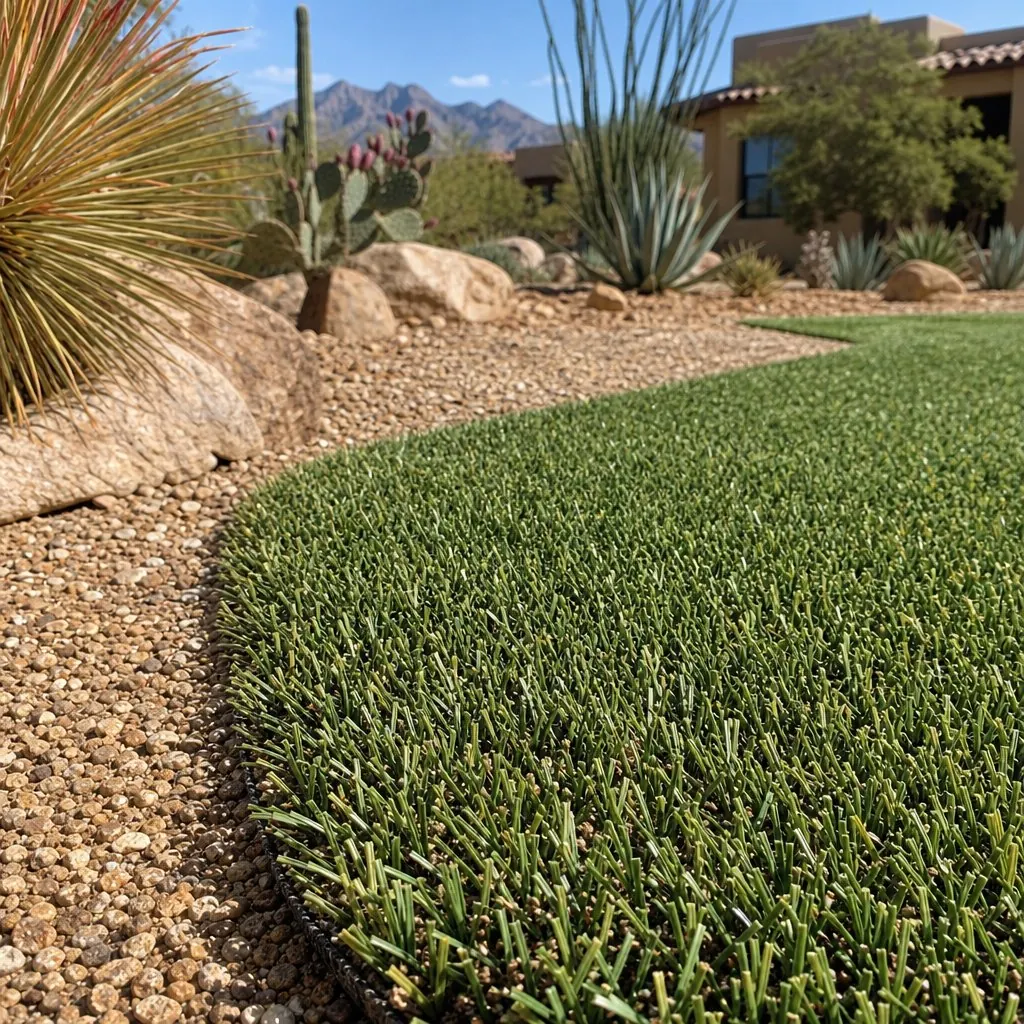
In the low desert around Tucson, bermudagrass is the best-adapted turfgrass for the heat and its water requirements, and the summer months are the ideal time to plant it. Which method you choose decides how long you wait.
How long does a new bermudagrass lawn take to establish?
It depends on the method. Seed takes about one month and demands multiple irrigations throughout the day so seedlings don’t dry out in the heat. Sod is ready for play and pets within a week, at instant-lawn cost. Sprigs land between the two. The method changes the wait more than the finished result.
The method changes the establishment time more than it changes the result.
| Method | Time to establish | What it demands |
|---|---|---|
| Seed | About one month | Multiple irrigations throughout the day, so seed germinates and seedlings establish without drying out in the heat |
| Sprigs | Intermediate between seed and sod | Spreading vegetative roots and stolons |
| Sod | Ready for play and pets within a week | An instant lawn, at instant-lawn cost |
Can hybrid bermudagrass be grown from seed?
No. Hybrid bermudagrasses are a sterile cross between common and African bermudagrass, so they can’t establish a lawn from seed at all. Sod or sprigs are the only routes in. Common bermudagrass is different: it sheds pollen, makes seed, and can be grown from seed or planted as sod, plugs or sprigs.
Common bermudagrass can be grown from seed or planted vegetatively as sod, plugs or sprigs. It sheds pollen and makes seed. The hybrids are a cross between common and African bermudagrass, are sterile, and do not shed pollen – but they cannot establish a lawn from seed at all. If a hybrid is what you want, sod or sprigs are the only routes in.
Should you overseed a new bermudagrass lawn its first winter?
No. The usual recommendation is to leave a newly planted bermudagrass lawn without winter grass in its first winter. Spring green-up is stressful enough without the young turf also competing against a vigorously growing winter grass. The lawn will lose its color that first winter, and that’s the correct outcome, not a failure.
The usual recommendation is that a newly planted bermudagrass lawn is not overseeded with a winter grass in its first winter. Green-up and regrowth the following spring is stressful enough without the new lawn also competing against a vigorously growing winter grass while conditions suit both.
That is worth knowing before planting, because it sets expectations for the first year: the lawn will go off-color that first winter, and that is the correct outcome rather than a failure.
What happens to bermudagrass in a Tucson winter?
It goes dormant. Common and hybrid bermudagrasses grow vigorously through summer, then frost across several continuous nights in November or December, or nights well below 32F, turns the grass blonde. That’s the dormant season showing, and overseeding in later years is what covers those months with a green winter lawn.
Common and hybrid bermudagrasses grow vigorously through summer and typically go dormant in winter. Frost across several continuous nights in November or December, or nights well below 32F, turns bermudagrass “blonde”. Overseeding in later years is what covers those dormant months.
Planning the work
Planting method, area, site preparation and irrigation capacity are the variables that move a quote. Those are property-specific, so they belong in a written estimate after a site visit rather than in a published price. Request a free quote and we will look at the site before quoting.
Sources
University of Arizona Cooperative Extension az1817, A Turfgrass Maintenance Guide for Residential and Commercial Lawns in the Low Elevation Arizona Desert (Kai Umeda, April 2020), read 2026-08-04. Current watering rules and conservation requirements are published by Tucson Water; confirm them directly before work begins.
Question 1 for property planning is how guide will be verified on this property. Leave the answer open until the applicable measurement, inspection, or owner selection is recorded in the scope.
Choose the Next Step for Your Sonoran Yard
Describe the site's sun, drainage, irrigation, and the way you want to use the space. Tucson Yard Works can review that context and prepare an estimate for a defined project.